Understood
What are you, who are you for, and what should you be associated with?
The MAPS Framework is the theory inside The MAPS Method. It defines four conditions that make a brand easier for search and AI systems to recognize, trust, retrieve and use. Each pillar answers a different question. The strength comes from how they overlap. Four boxes are only useful if they help you decide what to do on Monday.
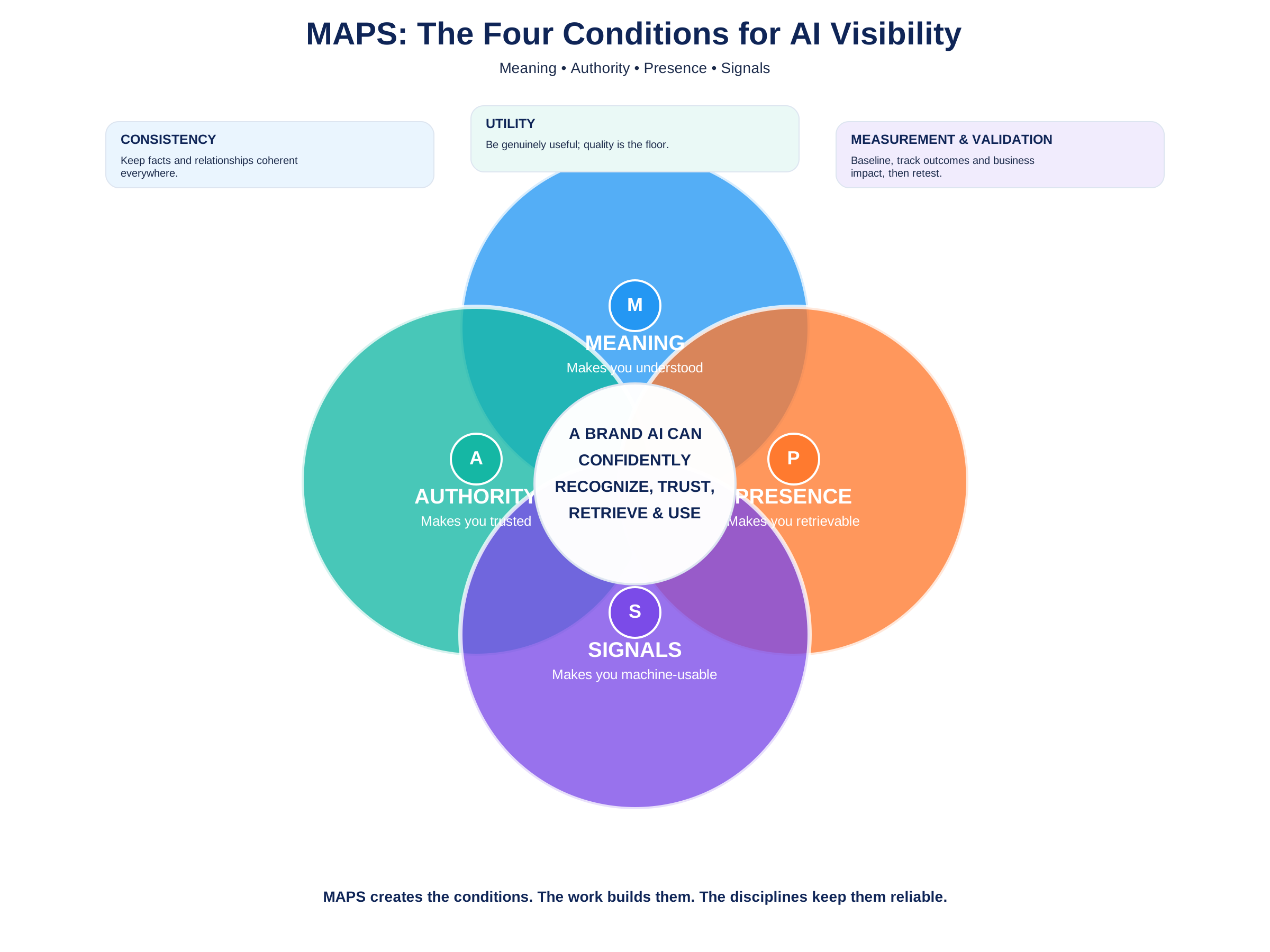
What are you, who are you for, and what should you be associated with?
What credible evidence makes those facts and claims believable?
Does the brand and its evidence appear where systems are likely to look?
Can systems access, resolve, extract, verify and use that evidence?
A model needs a coherent answer to basic questions: What is this entity? What category does it belong to? Who is it for? What does it offer? Which problems, topics and use cases should it be connected to?
Meaning is the intentional model of those relationships.
Meaning in detail →Understanding does not create credibility. Authority comes from proof: expertise, original evidence, customer outcomes, methodology, reputation and third parties that independently support the story.
Authority in detail →Evidence cannot influence an answer if the system never encounters it. Presence is about appearing across the searches, fan-outs, publishers, communities, reviews, directories, partners and market-specific sources that matter.
Presence in detail →Signals reduce friction between evidence and machine use. They cover crawlability, explicit structure, entity identifiers, structured data, extraction, provenance, freshness and, where relevant, machine-actionable commercial information.
Signals in detail →Facts and relationships should agree wherever they appear. Different language is fine. Conflicting identities are not.
Quality is the floor. A perfectly structured page that adds nothing useful is still weak evidence.
Establish a representative baseline, make a change, retest under comparable conditions, and connect visibility to business impact.
Within MAPS, Presence means retrievable presence. It is the availability of your brand and supporting evidence across the information environments a system may consult.
The final answer is an output. Presence is one of the conditions that can influence that output.
Meaning defines what you should be known for. Authority proves why you should be believed. Presence puts that evidence where systems look. Signals make the evidence usable.
You can call the discipline GEO, AEO, AI Search Optimization or simply search. MAPS is deliberately agnostic about the acronym. It describes the conditions, not the label attached to the work.
Everywhere, but especially Presence and Signals. Ranking, crawlability, internal linking, query coverage and technical access remain core inputs.
Meaning and Authority are where brand becomes operational. A clear identity and a corroborated reputation can shape both learned associations and live retrieval.