Technical access
Verify crawlability, indexability, rendering, canonicals, sitemaps and internal discovery for every priority page.
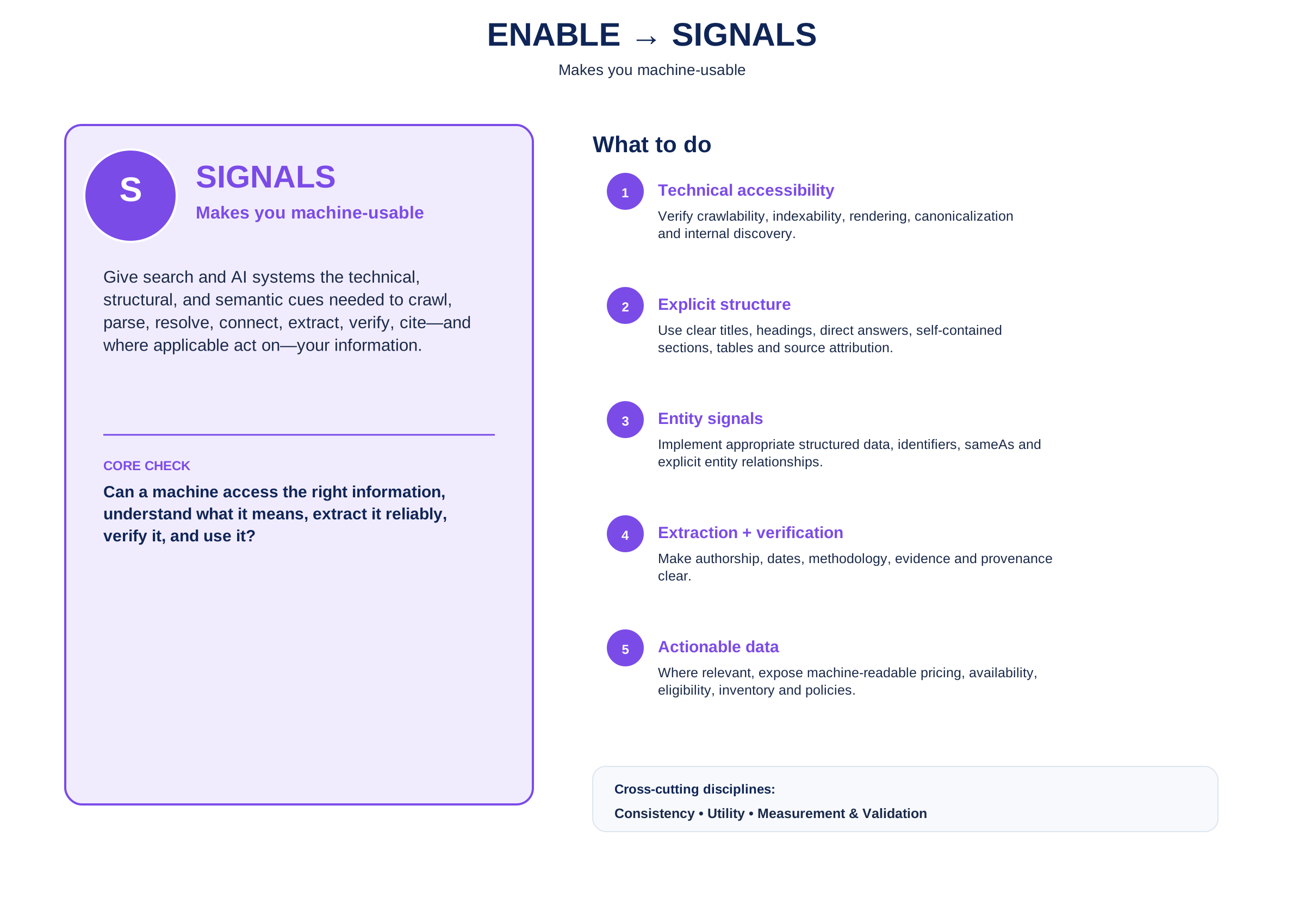
Signals are the technical, structural and semantic cues that let machines do something with the evidence they find. The job is not to manufacture authority with markup. The job is to make real evidence easier to crawl, resolve, extract, verify, cite and, where relevant, act on.
Enable the condition:
Core check: Can a machine access the right information, understand it, extract it reliably, verify it and use it?
Open the full Signals diagram ↗A useful page can still be difficult for machines to use. Content hidden behind rendering problems, ambiguous page structure, conflicting canonicals or unclear entity ownership creates unnecessary friction. Schema can label good evidence. It cannot manufacture it.
Verify crawlability, indexability, rendering, canonicals, sitemaps and internal discovery for every priority page.
Verify crawlability, indexability, rendering, canonicals, sitemaps and internal discovery for every priority page.
Use clear titles, headings, concise definitions, answer-first sections, tables and self-contained passages where they genuinely help.
Use appropriate Schema.org types, stable identifiers, sameAs for genuinely identical entities, and explicit parent/product/person relationships.
Expose authorship, update dates, methodology, sources, evidence provenance and stable URLs.
For transactional use cases, make price, availability, eligibility, inventory, policies and other required facts machine-readable and current.
Signals works best when the other conditions support it. Use the full audit to see whether the constraint actually sits here or somewhere else.