Define
Establish the entity, category, audiences, journeys, offerings, markets, target prompts and key relationships.
The MAPS Framework tells you what needs to be true. The MAPS Method turns those conditions into four workstreams: Define, Prove, Distribute and Enable. They overlap on purpose because real marketing, SEO and product work rarely fits into a single box.
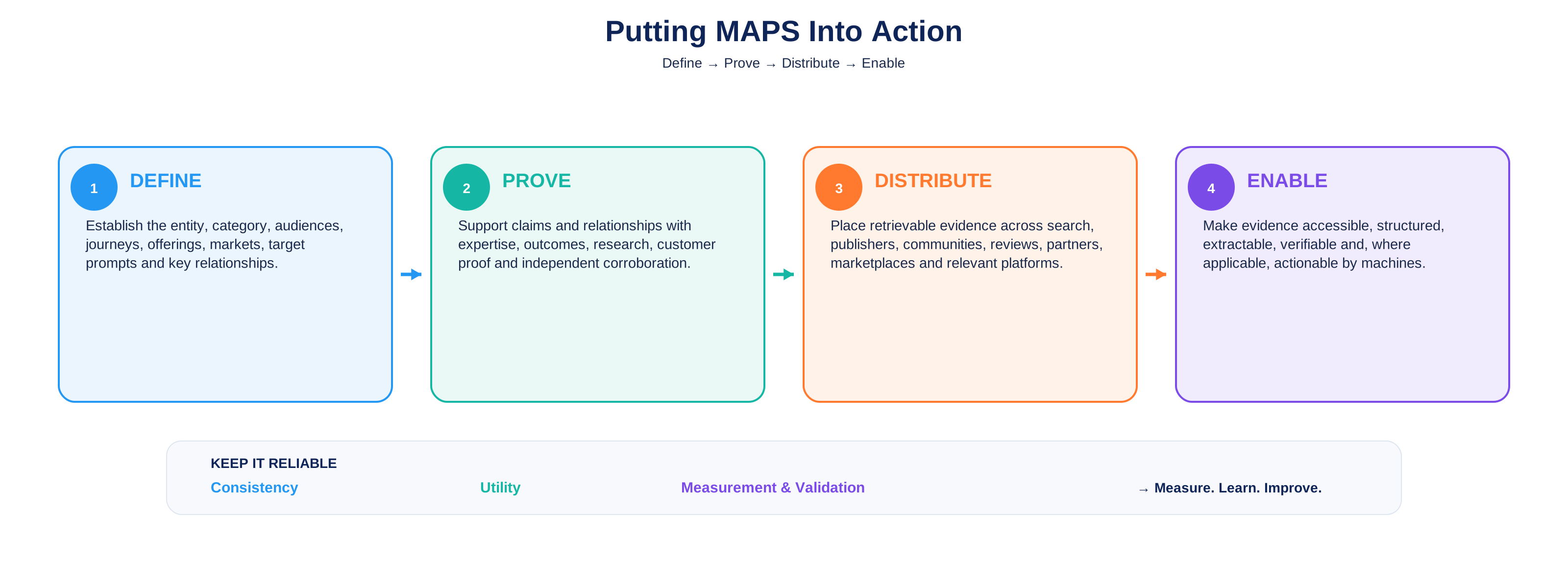
Establish the entity, category, audiences, journeys, offerings, markets, target prompts and key relationships.
Support claims and relationships with expertise, outcomes, research, customer proof and independent corroboration.
Place retrievable evidence across search, publishers, communities, reviews, partners, marketplaces and relevant platforms.
Make evidence accessible, structured, extractable, verifiable and, where applicable, actionable by machines.
Start with the entity and the demand around it. Define category, audience, buyer, user, offering, markets, journey, target prompt universe and the relationships you need the web to express.
Turn positioning into evidence. Support priority claims and relationships with expert knowledge, proprietary data, outcomes, customer proof and independent corroboration.
Put the evidence into the information ecosystem. Do not chase every citation source. Prioritize the places that matter to the audience, the prompt and the business.
Make the evidence easy for machines to access and use. Fix technical blockers, clarify structure, declare entities and relationships, and expose current actionable data where needed.
Maintain the identity. Reconcile stale facts, changed products, renamed entities and conflicting third-party profiles.
Ask whether the asset is genuinely useful after an AI answer exists. Proprietary evidence, current data, decision support and task completion are difficult to commoditize.
Use stable prompt sets, document test conditions, separate visibility from business impact, and retest interventions under comparable conditions.
Before adding schema, pitching journalists or publishing another article, work out whether the problem is Meaning, Authority, Presence or Signals. Do not boil the internet. Find the constraint first. The audit is designed to make that obvious.